 05 March 2026
 Share
Share
1

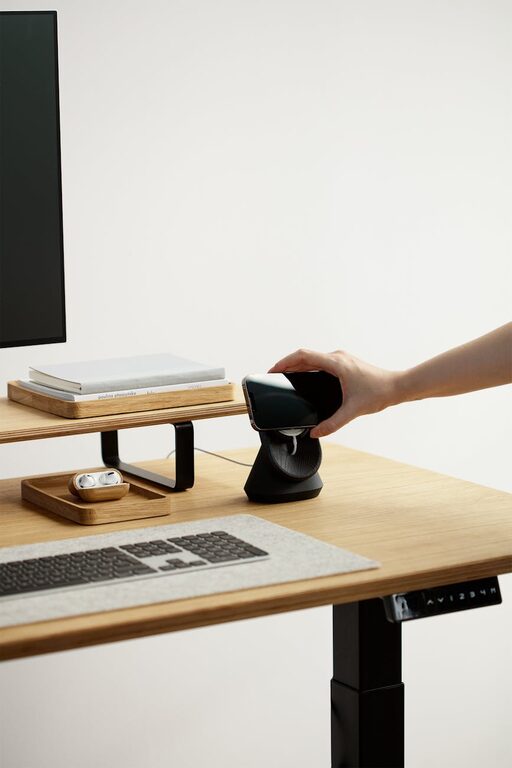
Working from home has become a common part of many people’s lives. While it offers flexibility, it also brings unique challenges, especially when it comes to staying productive and maintaining a sense of calm. Creating a home office environment that supports both focus and relaxation can make a significant difference in your work experience.
This guide explores effective tips to help you design a home office that encourages productivity while providing a tranquil atmosphere.
Selecting the right spot for your home office is the first step. Ideally, pick a space away from household distractions like the television or high-traffic areas. If possible, use a separate room that you can close off to signal the start and end of work.
– Natural light: Position your desk near a window to benefit from daylight, which can boost mood and energy.
– Quiet zone: Look for a quiet corner or room where external noise is minimal.
– Ventilation: Fresh air helps maintain alertness and comfort.
Comfort plays a huge role in productivity and wellbeing. Ergonomic furniture supports your body correctly and helps avoid strain during long hours.
– Adjustable chair: Choose one with lumbar support, adjustable height, and comfortable cushioning.
– Desk height: Opt for a desk that matches your height to avoid hunching or reaching.
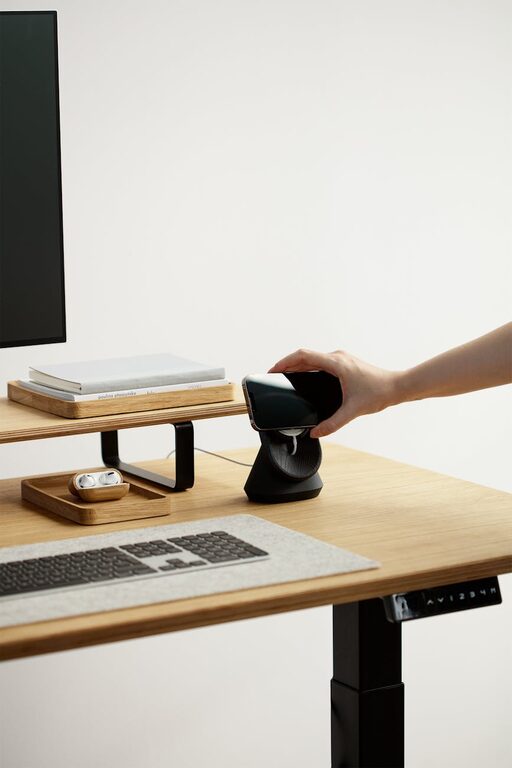
– Consider standing desks: Alternating between sitting and standing can reduce fatigue.
A cluttered workspace can cause stress and distract from tasks. Keeping your desk tidy and organised encourages clear thinking.
– Use storage solutions: Drawers, shelves, and organisers can keep documents and supplies neat.
– Minimalist approach: Keep only essential items on your desk.
– Cable management: Use clips or sleeves to tidy wires and chargers.
Adding personal touches can make your workspace inviting without becoming a distraction.
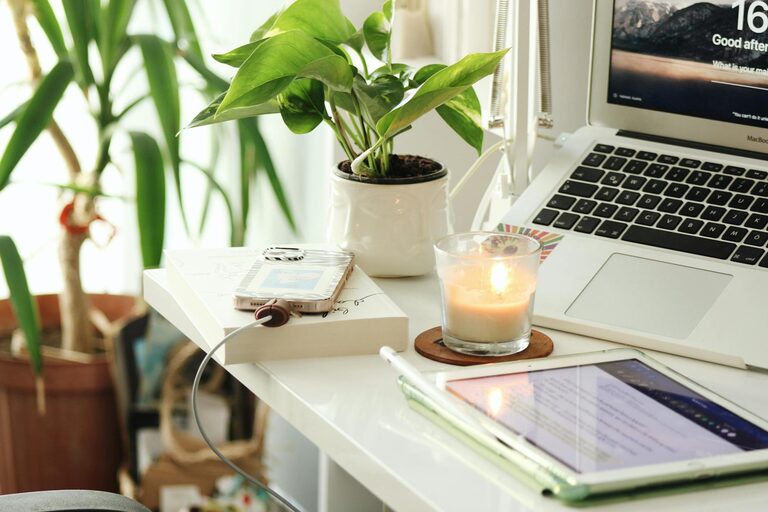
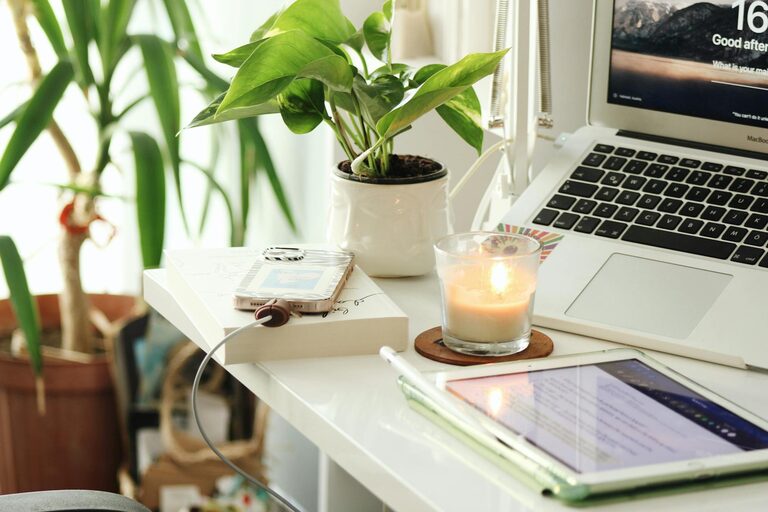
– Plants: Indoor plants improve air quality and create a calming atmosphere.
– Artwork: Choose inspiring or soothing images that enhance mood.
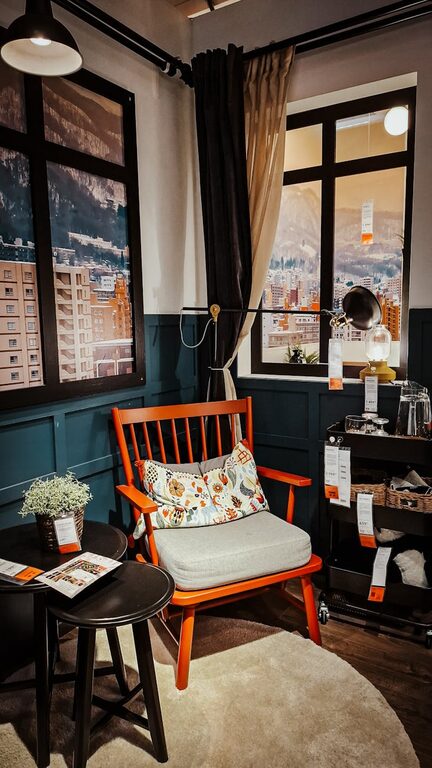
– Comfort items: Use cushions or blankets for added comfort, particularly if your chair is firm.
Lighting affects eye strain and productivity. Aim for a good balance between natural and artificial light.
– Natural lighting: Take advantage of daylight but avoid screen glare.
– Desk lamps: Use adjustable lamps with warm light for evening work.
– Soft ambient lighting: Floor or table lamps can create a welcoming atmosphere.
Noise can break concentration and increase stress. Find ways to reduce or manage background sounds.
– Noise-cancelling headphones: Great for blocking out distractions.
– Soundproofing: Use rugs, curtains, or acoustic panels to absorb sound.
– White noise machines or apps: Can help mask disruptive noises.
Maintaining a work-life balance is critical when your office is at home.
– Set clear working hours: Stick to a schedule to avoid overworking.
– Take regular breaks: Short breaks every hour help refresh your mind.
– Designate a finishing ritual: Shutting down your computer or tidying your desk at the end of the day signals rest time.
To maintain serenity during busy or stressful days, include elements that promote calm.
– Aromatherapy: Use subtle scents like lavender or peppermint to soothe.
– Mindfulness corners: A small area with cushions or meditation tools can help you recharge.
– Soft colours: Choose calming colour palettes (blues, greens, neutrals) for walls and furnishings.
A smooth-running technology setup reduces frustration and keeps you focused.
– Reliable internet: Ensure your connection is stable and fast.
– Organise devices: Keep all necessary gadgets within reach but minimise clutter.
– Use productivity tools: Apps and software that help manage tasks and schedules can improve workflow.
Your physical and mental wellbeing supports productivity.
– Stay hydrated: Keep a water bottle nearby.
– Posture checks: Regularly assess and correct your posture.
– Exercise: Incorporate stretching or light exercises during breaks.
—
Creating a calming and productive home office is about balancing comfort, organisation, and functionality. By tailoring your space with these tips, you can enjoy a workspace that supports both your professional goals and personal wellbeing. Remember, small changes can have a big impact on how you feel and work from home.